premium positioning best practice driven reactive ion etching roadmaps?
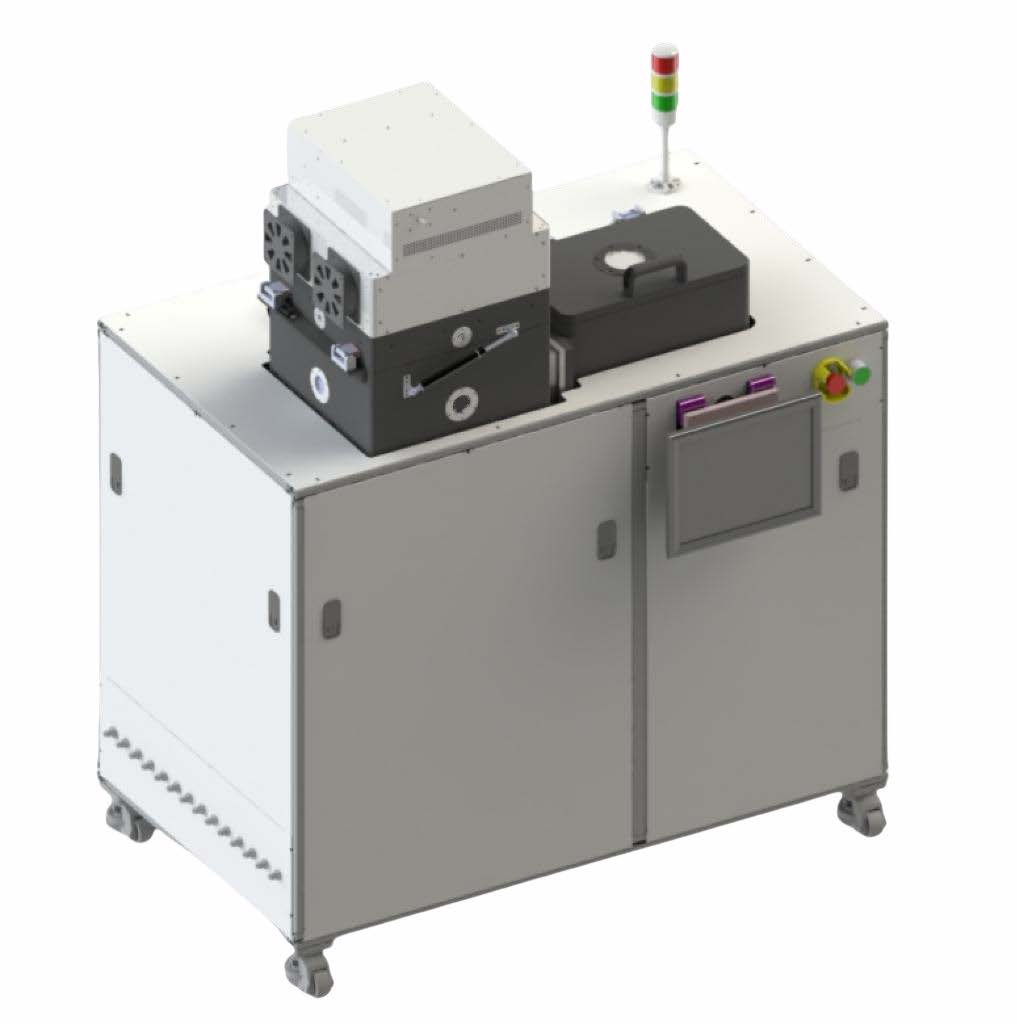
Central Ideas regarding ion-assisted etching in semiconductor manufacturing. This process exploits energized gas to finely ablate structural compounds for precise patterning during submicron fabrication. By altering essential attributes like atmospheric content, power magnitude, and operating pressure, the rate of material removal, selectivity index, and etching orientation can be precisely manipulated. Electrified etching has changed chip fabrication, transducers, and innovative electronic systems.
- What's more, plasma etching is broadly considered for areas involving light manipulation, clinical areas, and composite materials study.
- Countless types of plasma etching are known, including plasma ion reaction etching and inductive plasma removal, each with characteristic positive aspects and shortcomings.
The challenging characteristics of plasma etching demand a comprehensive grasp of the principal physical principles and chemical dynamics. This discussion seeks to offer a broad presentation of plasma etching, featuring its principles, different categories, applications, advantages, problems, and forthcoming changes.
Cutting-Edge Riechert Etchers in Microengineering
Relating to precision tooling, Riechert etchers are renowned as a top choice. These cutting-edge devices are valued for their extraordinary correctness, enabling the creation of sophisticated designs at the atomic range. By employing progressive etching methods, Riechert etchers offer precise control of the manufacturing sequence, forming premium outcomes.
Applications of Riechert etchers cover a wide assortment of fields, such as circuitry. From generating microchips to designing cutting-edge medical gadgets, these etchers represent a foundational element in forming the outlook of scientific progress . With dedication to achievement, Riechert defines criteria for exact microfabrication.
Core Principles and RIE Applications
Ion-enhanced reactive etching is regarded as a major method in device fabrication. RIE employs a amalgamation of charged particles and reactive gases to excise materials with high accuracy. This methodology requires bombarding the object surface with excited ion streams, which interact with the material to yield volatile detached molecules that are then evacuated by a pressure device.
RIE’s competence in anisotropic profiles makes it uniquely advantageous for producing elaborate formations in electronic circuits. Applications in device fabrication involve the creation of semiconductor switches, silicon dies, and lightwave devices. The technique can also create narrow openings and electrical conduits for advanced memory chips.
- RIE workflows grant stringent supervision over etch rates and substance differentiation, enabling the assembly of fine characteristics at extreme detail.
- Diversified gas species can be engaged in RIE depending on the processing target and desired etch traits.
- The linearly etching quality of RIE etching allows for the creation of vertical sidewalls, which is crucial for certain device architectures.
Achieving Fine Control in ICP Etching
Inductive plasma processing has manifested as a critical technique for producing microelectronic devices, due to its exceptional capacity to achieve high anisotropy and selectivity. The accurate regulation of etching controls, including power control, gas environments, and gas pressure, allows the precise adjustment of etching velocities and surface patterns. This pliability supports the creation of elaborate shapes with restricted harm to nearby substances. By modifying these factors, ICP etching can successfully mitigate undercutting, a habitual complication in anisotropic etching methods.
Review of Plasma Etching Strategies
Plasma-driven etching operations are regularly applied in the semiconductor realm for generating detailed patterns on manufacturing substrates. This investigation reviews varied plasma etching approaches, including chemical vapor deposition (CVD), to assess their potency for multiple materials and purposes. The summary focuses on critical aspects like etch rate, selectivity, and topography quality to provide a careful understanding of the capabilities and constraints of each method.
Regulating Plasma Controls for Superior Etching
Securing optimal etching efficiencies in plasma methods depends on careful condition tuning. Elements such as electrical force, chemical combining, and pressure setup greatly affect the pattern forming speed. By methodically modifying these settings, it becomes practical to enhance result robustness.
Understanding Chemical Mechanisms in RIE
Reactive charged particle etching is a primary process in micro-device manufacturing, which concerns the exploitation of active ions to selectively etch materials. The primary principle behind RIE is the interaction between these dynamic ion beams and the component face. This interplay triggers molecular processes that disintegrate and carry away subunits from the material, giving a desired design. Typically, the process utilizes a composition of charged molecules, such as chlorine or fluorine, which get activated within the plasma chamber. These ionized particles bombard the material surface, triggering the ablation reactions.Performance of RIE is governed by various considerations, including the classification of material being etched, the application of gas chemistries, and the environment settings of the etching apparatus. Detailed control over these elements is required for gaining high-level etch profiles and reducing damage to nearby structures.
ICP Etcher Profile Management
Reaching exact and consistent patterns is crucial for the success of numerous microfabrication methods. In inductively coupled plasma (ICP) method systems, governance of the etch outline is fundamental in determining scales and forms of features being engineered. Notable parameters that can be tuned to change the etch profile involve process gas composition, plasma power, sample temperature, and the electrode framework. By systematically modifying these, etchers can achieve outlines that range from rounded to highly structured, dictated by explicit application needs.
For instance, predominantly anisotropic etching is typically desired to create deep cuts or microvias with well-shaped sidewalls. This is achieved by utilizing heightened bromine gas concentrations within plasma and sustaining limited substrate temperatures. Conversely, equal etching yields soft profile profiles owing to its natural three-dimensional character. This type can be effective for area-wide material removal or surface leveling.
What's more, state-of-the-art etch profile techniques such as alternating gas etching enable the formation of extremely precise and slim and extended features. These techniques generally need alternating between etch cycles, using a compound of gases and plasma conditions to realize the planned profile.
Comprehending critical components that affect etch profile outcome in ICP etchers is crucial for maximizing microfabrication methods and accomplishing the accomplished device capability.
Ion-Based Etching Solutions
Charged gas etching is a important procedure implemented in semiconductor processing to carefully remove layers from a wafer disk. This technique implements charged plasma, a integration of ionized gas particles, to etch specific sites of the wafer based on their fabrication texture. Plasma etching provides several improvements over other etching ways, including high anisotropy, which enables creating tight trenches and vias with contained sidewall impact. This precision is essential for fabricating elaborate semiconductor devices with assembled designs.
Uses of plasma etching in semiconductor manufacturing are numerous. It is deployed to develop transistors, capacitors, resistors, and other major components that compose the basis of integrated circuits. Furthermore, plasma etching plays a important role in lithography operations, where it promotes the spot-on formatting of semiconductor material to outline circuit schematics. The superior level of control granted by plasma etching makes it an vital tool for up-to-date semiconductor fabrication.
Forthcoming Enhancements in Plasma Etching
Modern ion milling techniques is ever-changing, driven by the strengthened demand for improved reactive ion etch {accuracy|precision|performance