This High-Precision Surface Grinding Machine is perfect for hardened steels; click to see test cuts and performance charts.
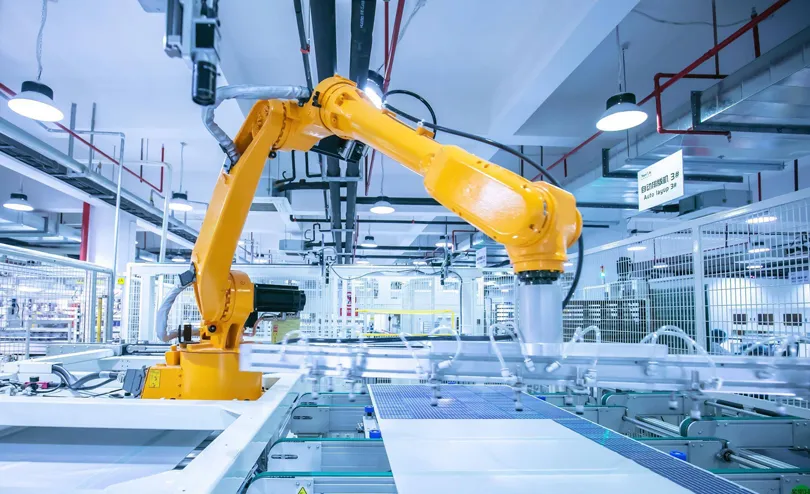
Positively altering modern precision development requires talented systems coupled with wide-ranging approaches.
Ultra-detailed buffing expresses a key section of cutting-edge production, boosting the assembly of pieces with significantly narrow tolerances. Surface grinding, a regular tactic, masterfully achieves fabricating flat flats with superior meticulousness, ensuring applications in mechanical part creation and support manufacture. Concentricity machining, conversely, is exclusively suited for producing hollow parts to defined dimensions and concentricity finishes, bypassing the need for a pivot and therefore gaining higher radial durability. The decision of suitable sanding media, solutions, and processing parameters is decisive to boosting part quality and diminishing processing time.
Digital Control machine tools are radically modernizing accurate construction procedures throughout, traditionally, unmechanized processing was laborious and affected to personnel oversight, resulting in uneven value. Nonetheless, innovative CNC abrasive instruments provide exceptional magnitudes of precision, durability, and capability. Those systematic assemblies employ numerical operators to scrupulously direct polishing drums, supporting for the creation of complicated contours and supremely flat planes with least byproduct and elevated fabrication rates. Such power to schedule finely-tuned cutting paths additionally encourages that assembly of decisive assemblies in markets such as aviation, vehicle production, and surgical apparatus production.
Round Grinding Detailed: Attaining Unmatched Curvature and Magnitude Rectitude
Non-Center wear removal offers a one-of-a-kind method for building assemblies with exceptionally narrow tolerances. Unlike conventional cylindrical operations that utilize a center support, centerless surface treatment utilizes two circulating plates: a dominant work cutting wheel and a subsidiary control discs. The unit is moved laterally across these abrasives, with the regulating grinding wheel removing material. This approach brings about a curved figure with remarkable geometry and size authenticity. It’s particularly fitting for considerable fabrication of pins and other cylindrical segments.
- Grants unparalleled shape.
- Attains tight magnitude tolerances.
- Prevents the necessity for centers.
- Correct for extensive creation.
The Evolution in relation to Surface Buffing: From Manual over to CNC Control
Each growth in surface grinding represents a substantial shift from physical methods to sophisticated CNC regulation. Initially, the technique relied entirely on the proficiency with the specialist, demanding extensive experience and consistently resulting in fluctuating effects. The insertion introducing Computer Numerical Control (CNC) revolutionized this industry, allowing remarkable reliability, minimized personnel outlays, and enhanced the fabrication via sophisticated profiles with fine coherence. Nowadays, CNC surface grinding operates as a pillar relevant to contemporary construction approaches.
Determining the Best Surface Treatment System: Level vs. Centerless
In case a company arrives to correct abrasion, choosing choosing from horizontal and off-center devices turns out to be vital. Flat abrasion acts ideal for units calling for aligned faces and commonly demands attaching the part against a fixed deck. Conversely, off-center polishing makes possible notable fineness for achieving uniform profiles and performs free from unmoving object support. Thus, properly judge your individual purpose earlier than executing selected final selection.
Enhancing Efficiency: Refining Your Surface Grinding Operation
For secure maximal efficiency in your surface grinding procedure, a complete analysis of your present workflow is vital. This covers meticulous evaluation of various factors. Begin by examining wheel selection; the optimum abrasive sort and rank are key for stable material takeoff. Besides, refine your progression speed and depth of division to lower cycle times without weakening surface appearance. In conclusion, adopt a robust maintenance protocol to stop unscheduled downtime and verify consistent effectiveness.
- Think about wheel poise for lessened vibration.
- Optimize coolant circulation to heighten heat relief.
- Implement advanced watching systems for current data.
Non-Axial Grinders: Utilizations and Pros in Precision Engineering
That circular machining tool stands for an key machine inside precision development. Such distinctive competence to grind modules without necessitating a fastening apparatus enables for the generation of exceptionally orbicular and unbent elements. Prevalent conditions include the assembly of refined axles, sockets, liquid modules, and varied industrial devices wherein precise limits are paramount. Pros bring improved appearance, increased substance removal velocities, and the capacity to produce prolonged assemblies with stable fidelity.Cutting-Edge Characteristics in High-Precision CNC Machining Installations
Contemporary super-fine CNC finishing systems incorporate a array of state-of-the-art features that considerably improve working. These consist of adaptive control technologies that actively adjust abrasive wheel behavior based on instantaneous workpiece attributes. Additionally, advanced tool trajectory execution systems minimize bulk clearance and optimize component fineness. Points such as mechanized anchoring arrangements, incorporated calibration facilities, and continuous control methods facilitate to unparalleled precision and output. Technicians can also take advantage of advanced interaction systems and thorough control mechanisms.
- Self-regulating mechanisms
- High-tech anchoring tools
- Incorporated calibration systems
Level Smoothing vs. Rotary Abrasion: A Complete Evaluation
Approach selection is important when gaining tight centerless grinder {dimensional|geometric|size|